Methodology
Participants share personal water stories and engage in movement-based practices that foster sensory and emotional awareness of their surroundings. Through pre- and post-session surveys, we assess shifts in perceptions of river health and personal well-being, exploring how artistic engagement may shape environmental attitudes. By examining the relationship between self-reported health and ecological awareness, Watershed Movements highlights the potential of creative practices as transformative tools for environmental education, conservation, and community resilience.
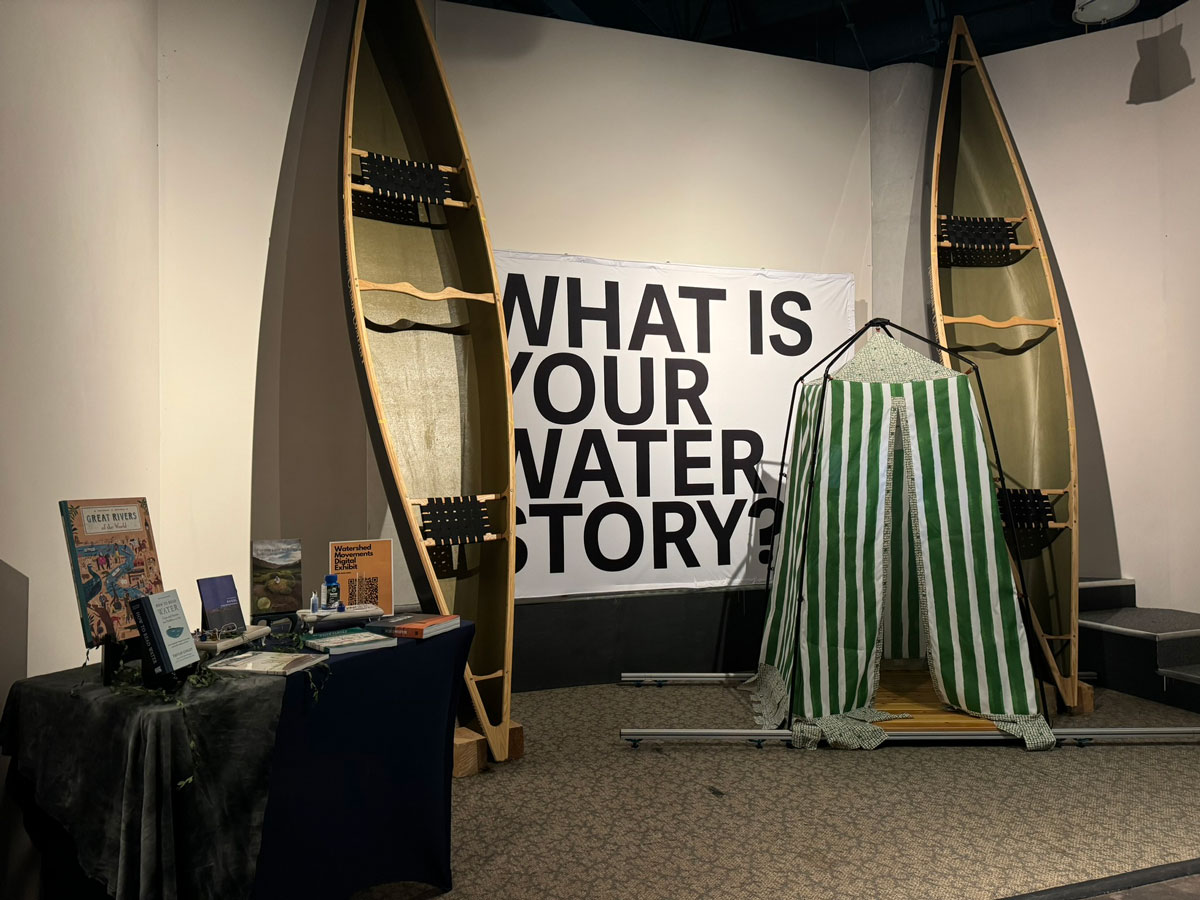

Storytelling Booth
Storytelling is a central methodology in Watershed Movements because it communicates the lived, embodied dimensions of environmental change—perspectives often missing from scientific data alone.
- During each session, participants share a memory, story, or reflection connected to water—Genesee, Raquette, or other waters.
- Stories are open-ended, spontaneous, and participant-led, allowing space for emotion, memory, and meaning.
- Recordings are analyzed to understand themes of connection, identity, and environmental awareness.
By integrating storytelling in this way, the project deepens public engagement, supports collective meaning-making, and cultivates resilience across watershed communities.
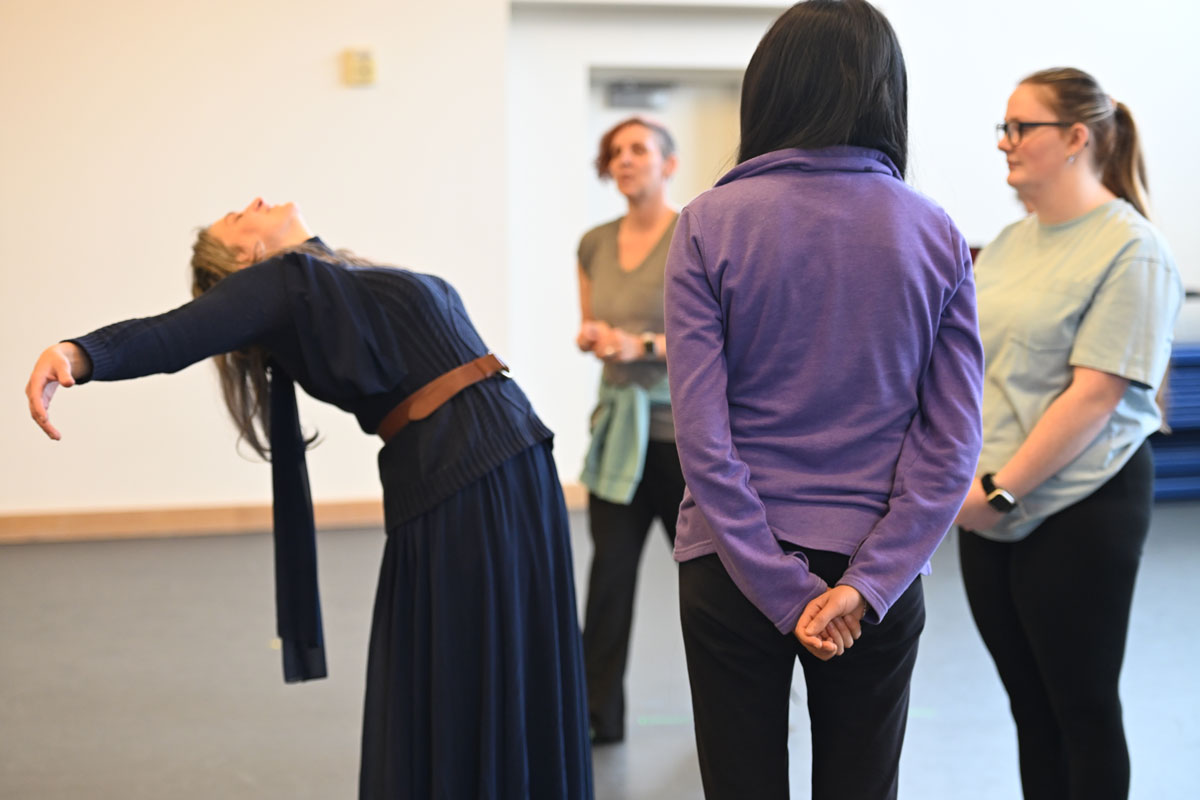
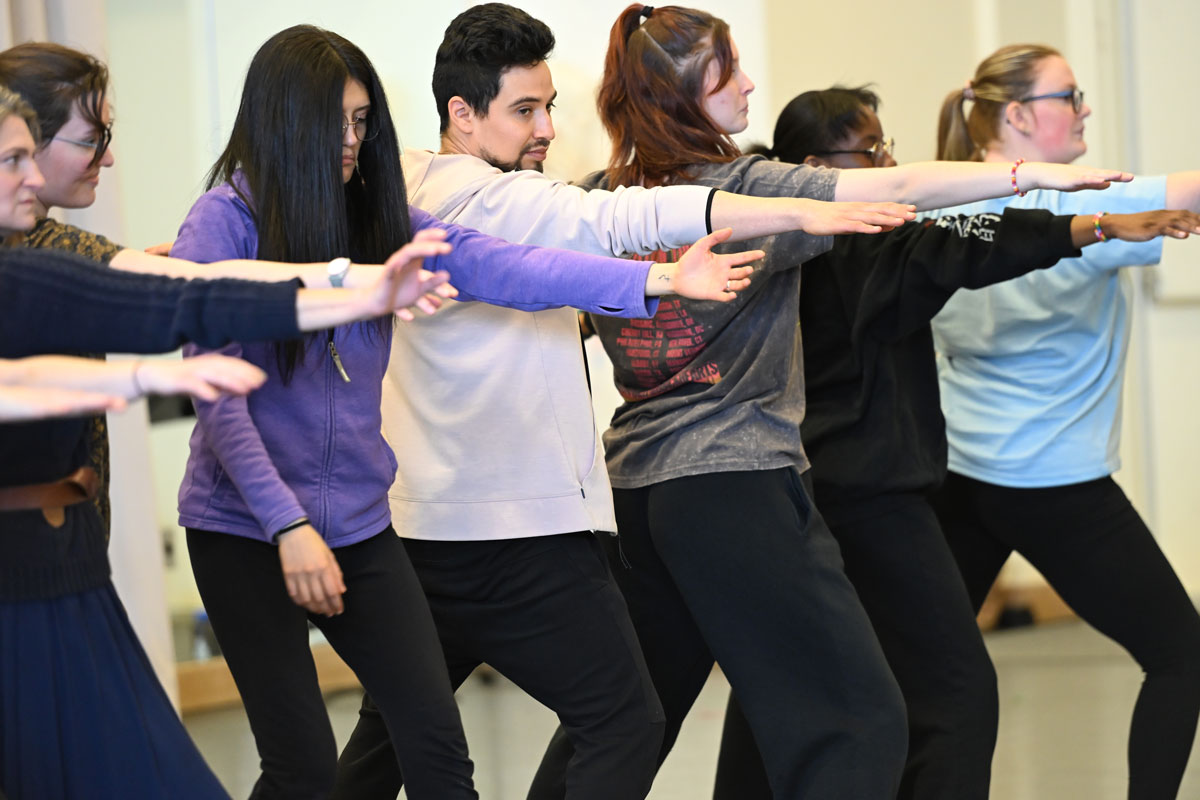
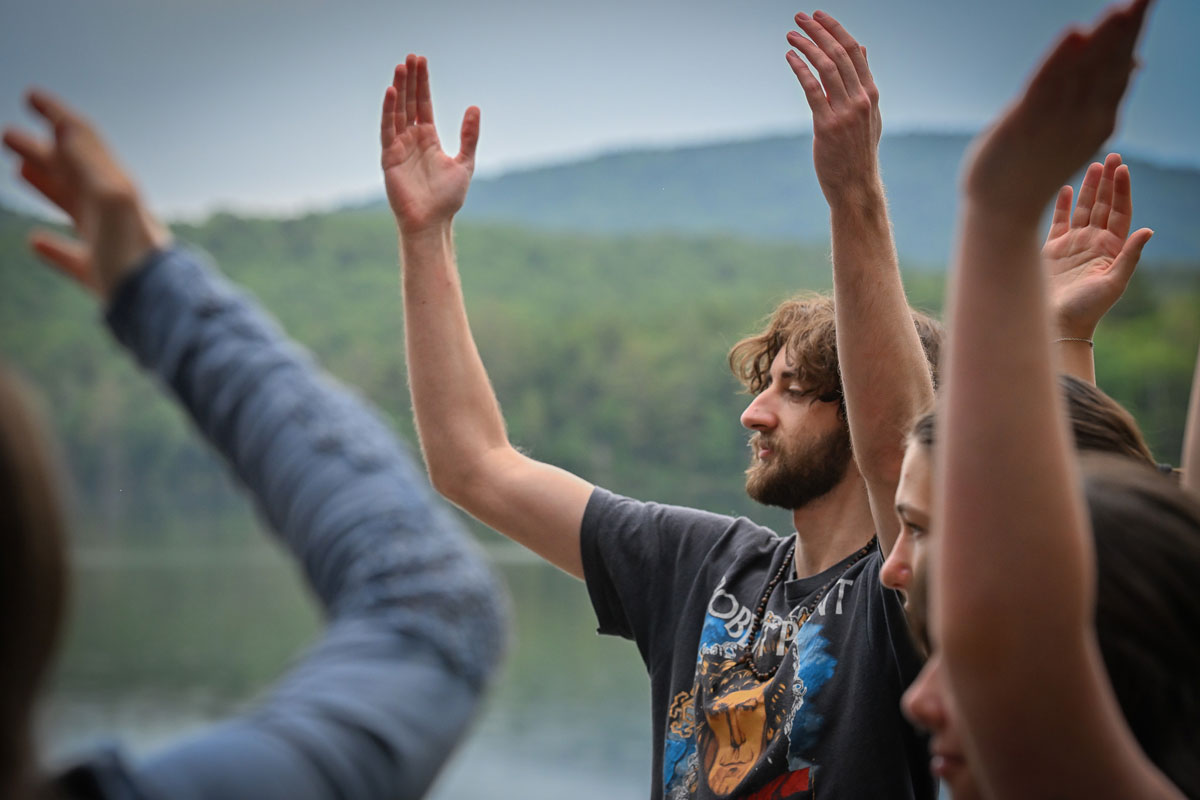
Embodied Movement Choirs
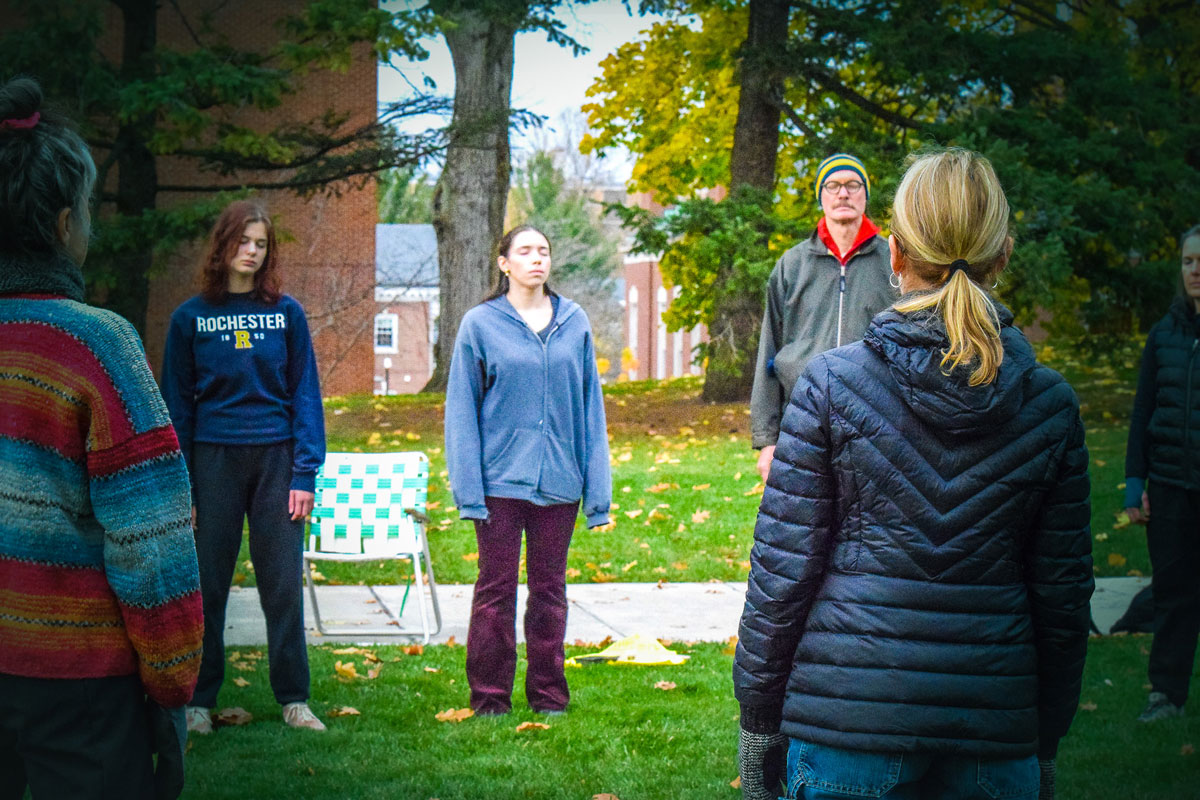
Watershed Movements explores embodied dimensions of ecological knowledge and place-based connection. Through somatic engagement with landscape, participants explore alternative ways of knowing that complement scientific data. Embodiment grounds abstract environmental concepts in lived experience, allowing for more nuanced understandings of how human and ecological systems are intertwined.
Before & After Reflection Surveys
Following the experience, participants reported significant increases in their perception of the river’s health (+40 pp), their own well-being (+25.7 pp), and the connection between the river and personal well- being (+31.5 pp). However, there was a slight decline (−8.6 pp) in the number of participants who rated their personal connection to the river as high. These findings suggest that while the study enhanced understanding of the river’s health and its relevance to human well-being, it may have complicated or reframed individuals’ sense of personal connection to the river.
Inclusive & Respectful Research Design
This study centers participants’ own perceptions and lived experiences, using storytelling and self- assessment to value diverse ways of knowing. By inviting individuals to reflect on their well-being and connection to the river, it fosters respectful, place-based engagement that honors personal and cultural relationships to water.